
Testosterone Therapy in Warren, OH: A Lab-First Guide for Men
Testosterone therapy is a medical treatment that may help men with confirmed low testosterone and symptoms such as low drive, fatigue, reduced muscle strength, mood changes, or decreased sexual function. It should not be used simply as an anti-aging shortcut. The safest path starts with symptoms, proper labs, health history, and clinician review before any testosterone replacement therapy or TRT therapy decision is made.
What Testosterone Therapy Means for Men
Testosterone therapy, also called testosterone replacement therapy or TRT, is designed to help restore testosterone levels in men who have clinically low testosterone and symptoms that match the lab findings.
Testosterone supports sexual function, red blood cell production, muscle mass, bone strength, mood, energy, and fertility-related signaling. Low testosterone can affect men differently, which is why symptoms alone are not enough for diagnosis. Cleveland Clinic notes that low testosterone is generally considered when symptoms are present along with low measured levels, often below 300 ng/dL depending on the lab and clinical context.
At Fuel by Design in Warren, OH, the goal is not to chase a number. The goal is to understand the full picture. That includes testosterone levels, symptoms, metabolic markers, lifestyle factors, sleep, stress, body composition, medications, and long-term health goals.
Men considering testosterone treatment for men can begin by reviewing Male TRT Optimization in Warren OH to understand how a clinician-guided process may work.
When Low Testosterone May Be Worth Evaluating
Low testosterone can be overlooked because the symptoms may feel vague at first. Many men describe it as “not feeling like myself,” but that can come from several causes.
Common reasons men seek evaluation include:
- Lower sex drive or reduced sexual performance
- Fewer morning erections
- Low motivation or reduced confidence
- Fatigue that does not improve with rest
- Increased body fat despite effort
- Reduced muscle strength or slower recovery
- Brain fog or lower mental sharpness
- Mood changes, irritability, or low drive
- Poor sleep or non-restorative sleep
Mayo Clinic notes that symptoms often linked with low testosterone may also be caused by sleep apnea, thyroid problems, medication side effects, diabetes, depression, or other health issues. That is one reason a blood test and clinical review are essential before treatment decisions are made.
| Concern | What It May Suggest | Best Next Step |
|---|---|---|
| Low libido or fewer morning erections | Possible hormone, vascular, stress, sleep, or medication influence | Review symptoms with labs and medical history |
| Fatigue and low motivation | May relate to testosterone, sleep, thyroid, nutrition, or mood | Avoid guessing and complete a full clinical intake |
| Weight gain and reduced muscle | May involve metabolic health, low activity, insulin resistance, or hormones | Evaluate metabolic and hormone markers together |
| Brain fog and poor recovery | May reflect sleep debt, stress, low testosterone, or under-recovery | Review lifestyle, training, sleep, and lab patterns |
| Fertility concerns | TRT may reduce sperm production in some men | Discuss fertility goals before starting therapy |
Why Labs Come Before TRT Therapy
A lab-first approach protects men from two common mistakes.
The first mistake is assuming every symptom is testosterone-related. A man may have fatigue from sleep apnea, stress, thyroid dysfunction, blood sugar problems, poor recovery, nutrient issues, medication effects, or depression. TRT therapy may not address the true driver if the evaluation is too narrow.
The second mistake is treating a lab number without looking at the person. Testosterone levels can fluctuate. The Endocrine Society patient resource notes that testosterone changes throughout the day, is highest in the morning, and should be measured more than once for accurate assessment.
A responsible testosterone therapy evaluation may review:
- Total testosterone
- Free testosterone
- SHBG when appropriate
- Estradiol when clinically relevant
- CBC and hematocrit
- PSA when appropriate by age and risk
- Lipids
- A1C or glucose markers
- Thyroid markers
- Liver and kidney markers
- Blood pressure and cardiovascular risk factors
- Sleep quality and possible sleep apnea signs
- Fertility goals
This is why Fuel by Design positions testosterone care as precision wellness, not a quick prescription. Men in Warren, Youngstown, Boardman, Poland, Canfield, and across Ohio telehealth care need a plan that fits their labs, history, and goals.

Testosterone Replacement Therapy vs Boosters and Lifestyle
Many men try over-the-counter boosters before seeking a clinical evaluation. Some supplements promise energy, performance, or hormone support, but they do not replace testing or medical review. Some products may be ineffective, poorly studied, or risky depending on ingredients, interactions, and health history.
Lifestyle can still matter. Weight management, resistance training, sleep quality, alcohol moderation, protein intake, and metabolic health may support better hormonal function for some men. But lifestyle support and testosterone replacement therapy are not the same thing.
A careful approach asks: what does the data show?
| Option | Best For | What to Know |
|---|---|---|
| Lifestyle optimization | Men with borderline patterns, poor sleep, low activity, or metabolic stress | May support natural testosterone, but results vary |
| OTC testosterone boosters | Men looking for non-prescription options | Quality and evidence vary widely, and they do not replace labs |
| TRT therapy | Men with symptoms and confirmed low testosterone after provider review | Requires monitoring, dose management, and risk review |
| Metabolic care | Men with weight gain, insulin resistance, or low energy | Metabolic health can influence hormone patterns |
| Full hormone and wellness evaluation | Men with overlapping fatigue, low drive, weight gain, and recovery issues | Helps avoid treating one number while missing the bigger picture |
For men who are not sure whether TRT fits, reviewing the broader Services can help clarify how hormone optimization, medical weight loss, and longevity care may connect.
What a Lab-First TRT Process Can Look Like
A practical testosterone therapy process should feel structured and measured.
Step 1: Request a Consultation
The first step is to share your concerns, goals, health history, and symptoms. This is not a diagnosis. It is the starting point for clinical clarity.
Step 2: Complete Intake and Review History
A provider needs to understand medications, sleep, stress, cardiovascular history, fertility goals, prostate history, prior labs, body composition changes, and lifestyle patterns.
Step 3: Order Appropriate Labs
Labs help determine whether testosterone is truly low, whether the pattern is repeatable, and whether other systems may be contributing.
Step 4: Build a Personalized Plan
If testosterone replacement therapy is clinically appropriate, the plan should be individualized. The route, dose, follow-up rhythm, and monitoring should be based on clinical factors, not a generic template.
Step 5: Monitor and Adjust
TRT therapy requires follow-up. Monitoring helps evaluate response, side effects, hematocrit, testosterone levels, symptoms, blood pressure, and whether the plan remains appropriate over time.
Men ready to begin with a structured process can use Contact to request a consultation and review next steps.

Benefits, Risks, and Monitoring to Understand
Testosterone therapy may support some men with confirmed hypogonadism. Potential benefits may include improved sexual function, better energy, improved mood, increased lean mass support, stronger recovery, and improved quality of life. Results vary, and not every man feels the same response.
The risks matter just as much.
Mayo Clinic lists potential risks of testosterone therapy, including worsening sleep apnea, acne or skin reactions, prostate-related concerns, breast enlargement, reduced sperm production, testicular shrinkage, and increased red blood cell production. The FDA also updated testosterone product labeling in 2025, noting TRAVERSE trial information, retaining limitation-of-use language for age-related hypogonadism, and adding warnings about increased blood pressure for testosterone products.
That is why monitoring is not optional. A responsible plan may include:
- Follow-up testosterone labs
- CBC and hematocrit monitoring
- Blood pressure monitoring
- Symptom review
- Prostate screening when appropriate
- Estradiol review when clinically indicated
- Side effect review
- Fertility discussion before treatment
- Sleep apnea risk discussion
A premium testosterone treatment for men should not feel rushed. It should feel clear, calm, and clinically grounded.
For men comparing programs, Male TRT Optimization in Warren OH explains Fuel by Design’s approach to lab-guided male hormone care.
How Weight, Metabolic Health, and GLP-1 Medications May Relate
Low testosterone and metabolic health often overlap. Men with increased body fat, insulin resistance, poor sleep, low activity, or chronic stress may experience hormone changes. In some cases, improving body composition and metabolic health may support testosterone levels or improve symptoms that feel hormone-related.
GLP-1 medications may support weight loss and metabolic improvement for eligible patients, but they are not testosterone therapy. A GLP-1 does not directly replace low testosterone. However, if a man’s low testosterone pattern is connected with obesity, insulin resistance, or poor metabolic health, clinically guided weight loss may be part of the broader strategy.
Eligibility for GLP-1 medications depends on medical history, labs, contraindications, medication review, and provider judgment. The same is true for TRT therapy. The best question is not “Which treatment is strongest?” The better question is “What is actually driving the problem?”
This is where Fuel by Design’s lab-first model is valuable. The plan can consider hormones, metabolism, performance, sleep, and recovery together rather than treating each concern in isolation.
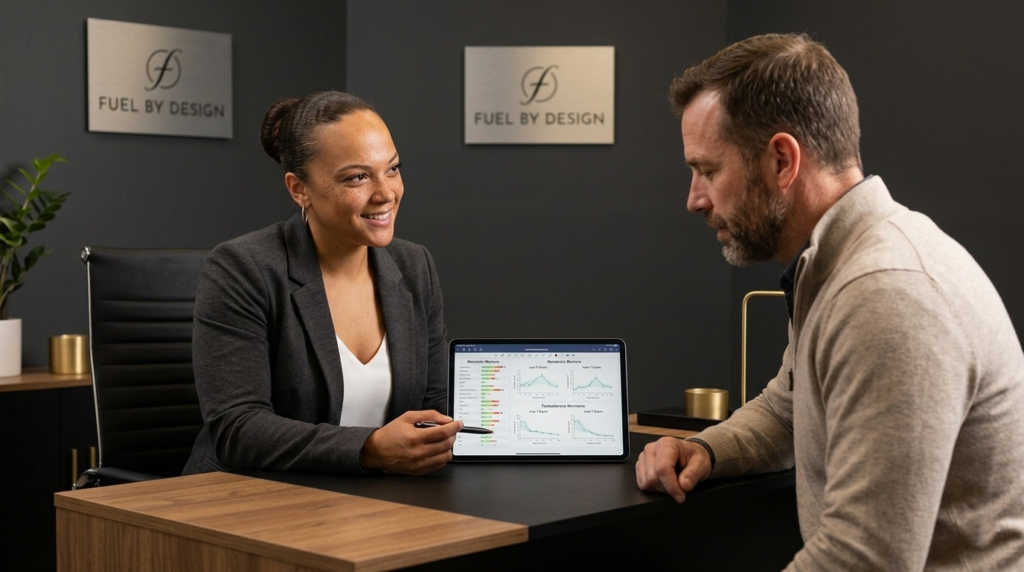
Testosterone Therapy Near Warren, Youngstown, Boardman, Poland, and Canfield
Fuel by Design provides in-person care in Warren, OH and telehealth across Ohio when appropriate. That makes the clinic accessible for men in nearby communities including Youngstown, Boardman, Poland, and Canfield.
Local men often seek care because they are busy professionals, executives, entrepreneurs, first responders, business owners, or high-performing adults who want data-driven answers. They may not want a generic “try this and see” approach. They want a clear process, appropriate labs, and a clinician who can connect symptoms with biology.
Testosterone therapy may be one part of care. It may also be the wrong starting point if labs, history, or risk factors suggest another priority. That is why Fuel by Design emphasizes clarity first.
A strong care plan should answer:
- Are testosterone levels actually low?
- Do symptoms match the lab pattern?
- Are there sleep, thyroid, metabolic, or medication factors?
- Is fertility a current or future goal?
- Are there cardiovascular, prostate, hematocrit, or blood pressure concerns?
- What does progress look like after 60 to 90 days?
- How will safety be monitored?
Men who want a broader view of Fuel by Design’s precision wellness approach can explore Services before scheduling.
How to Prepare for a Consultation
Before discussing testosterone therapy, gather as much context as possible. This helps the provider see patterns that may not be obvious from symptoms alone.
Bring or prepare:
- Recent labs if available
- Current medication list
- Supplement list
- Sleep concerns or snoring history
- Weight change history
- Exercise routine
- Alcohol intake
- Stress level
- Fertility goals
- Prior TRT or hormone use
- Cardiovascular and prostate history
- Main goals for energy, drive, recovery, or performance
It may also help to write down when symptoms started, what has changed, and what you have already tried. For example, some men have trained harder, changed nutrition, or taken supplements without understanding that sleep apnea, insulin resistance, or medication effects may be involved.
The right consultation should leave you with a clearer understanding of your options, not pressure. Whether the next step is TRT therapy, lifestyle support, metabolic care, or further evaluation, the goal is a plan that fits your biology and your life.
FAQ
What will testosterone therapy do for you?
Testosterone therapy may help restore low testosterone symptoms when labs confirm a true deficiency. For some men, appropriate TRT therapy may support sexual function, mood, energy, muscle maintenance, recovery, and overall quality of life. However, results vary, and it is not a guaranteed solution for fatigue, weight gain, or aging. A provider should first review labs, symptoms, sleep, metabolic health, medications, fertility goals, and risk factors before recommending treatment.
When should a man get testosterone therapy?
A man should consider testosterone therapy only after symptoms and repeated lab testing support low testosterone. Symptoms alone are not enough because fatigue, low mood, poor recovery, and weight gain can come from many causes. A careful evaluation usually includes morning testosterone testing, medical history, medication review, metabolic markers, and discussion of risks. TRT may be appropriate for some men with hypogonadism, but normal aging alone is not usually a responsible reason to begin therapy.
Why are doctors so against TRT?
Doctors are not necessarily against TRT, but many are cautious because testosterone therapy requires proper diagnosis and monitoring. TRT can be helpful for appropriately selected men, but it can also affect red blood cell count, blood pressure, sleep apnea, acne, fertility, prostate monitoring, and other health factors. Some clinicians are concerned about misuse, overprescribing, or treating normal aging without clear medical need. A lab-first, monitored approach helps reduce unnecessary risk.
Can GLP-1 help with low testosterone?
GLP-1 medications do not replace testosterone, but they may support metabolic health when clinically appropriate. In some men, excess weight, insulin resistance, poor sleep, and inflammation may be connected with lower testosterone patterns or symptoms that feel hormone-related. If weight loss improves metabolic function, testosterone levels or symptoms may improve for some patients. However, GLP-1 eligibility requires provider review, and men with confirmed low testosterone may still need a separate hormone evaluation.
Is ejaculating every day good for testosterone?
Ejaculating every day is not a proven strategy for meaningfully increasing testosterone. Sexual activity and ejaculation can influence short-term hormonal fluctuations, but they are not a reliable treatment for clinically low testosterone. Men should be cautious about using internet claims to self-diagnose or self-treat hormone concerns. If symptoms such as low libido, fatigue, reduced erections, mood changes, or poor recovery persist, a lab-based clinical evaluation is the safer next step.
Educational Disclaimer
This content is for educational purposes only and is not medical advice, diagnosis, or treatment. Care decisions require a consultation, appropriate labs, and provider review. Results vary.